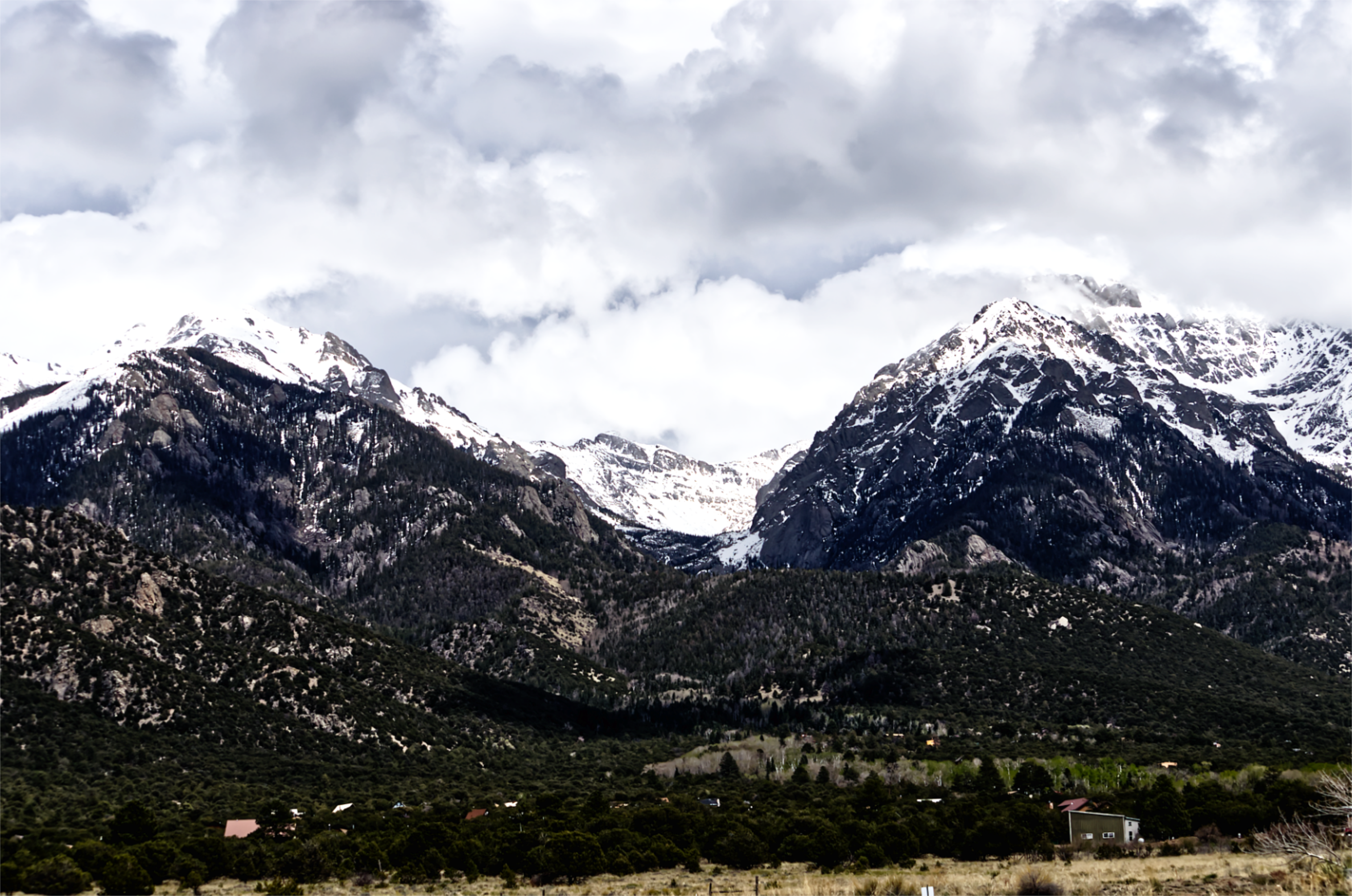
A state of mind. It’s what you get in what you see.
What is Art?
A state of mind. It’s what you get in what you see.
Danny C Boyce – Photographic Artistry
“The single most important component of a camera is the twelve inches behind it!”
– Ansel Adams
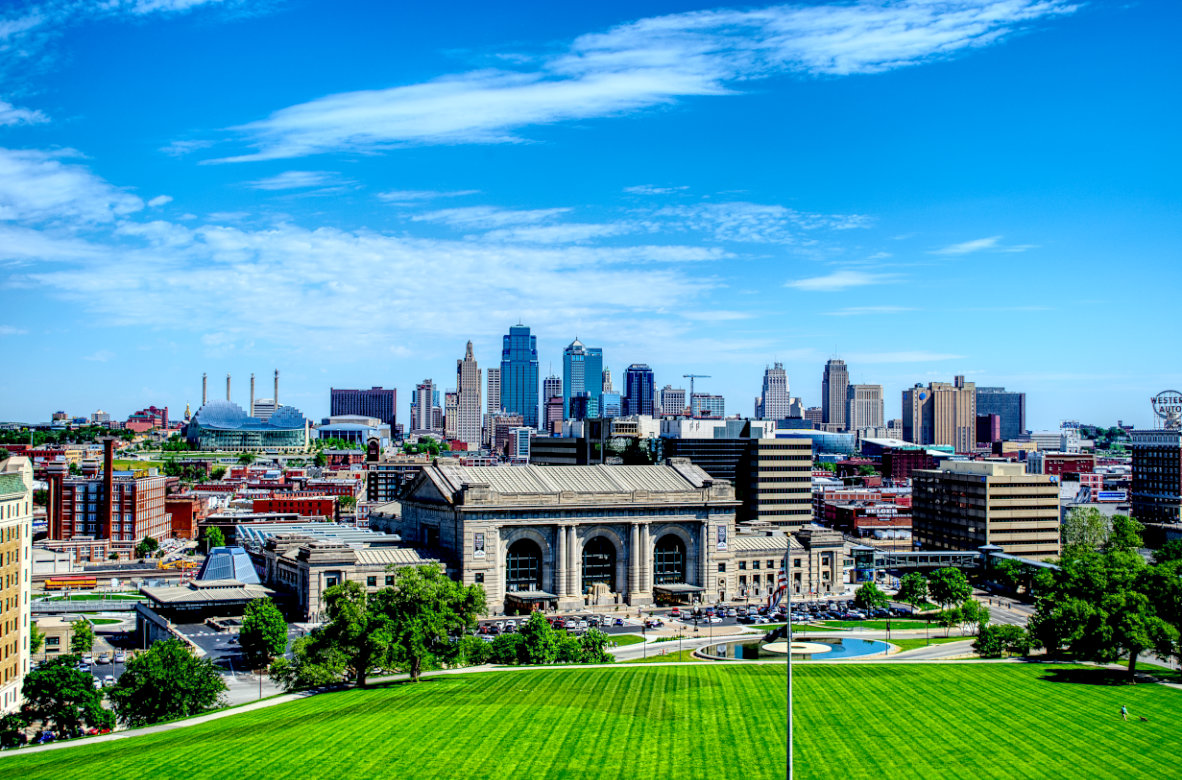
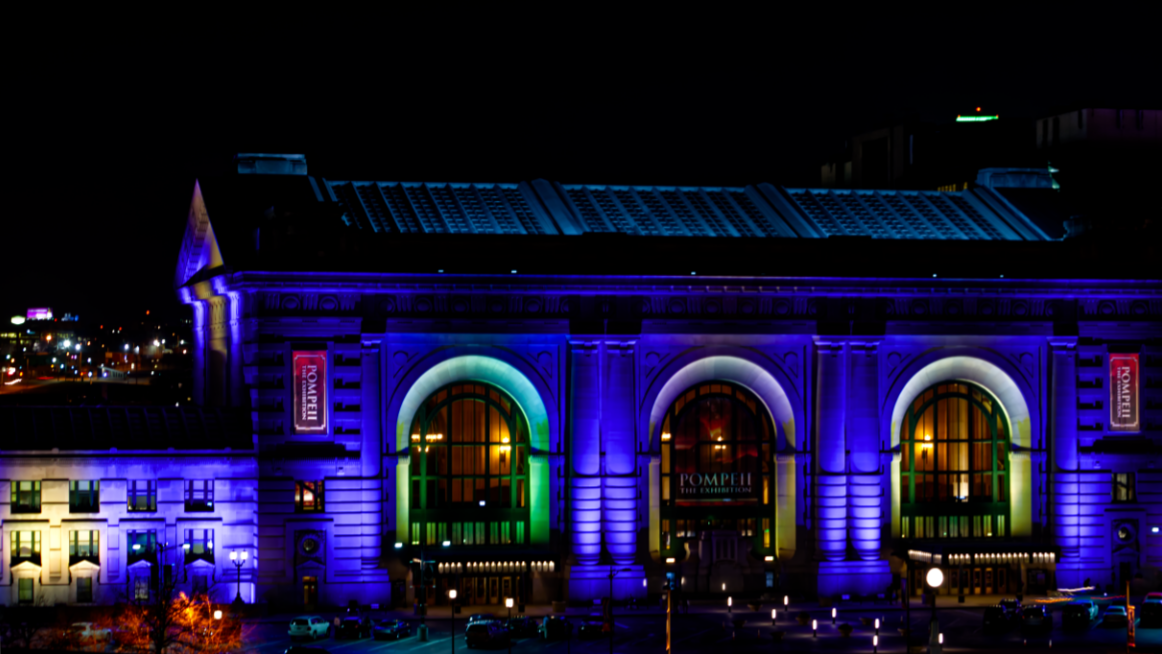
It’s inside the renewed, and repurposed, KC Railway Station
When I release my work into the world, I’m constantly amazed by how differently each viewer interprets and responds to the same image. I’ll create a photograph thinking it conveys one specific message, only to discover through feedback and conversations that recipients see layers of meaning I never intended. This disconnect fascinates me because it reveals how my art becomes a collaborative experience – I provide the visual foundation, but the viewer brings their own experiences, emotions, and cultural background to complete the narrative in their own mind.
I’ve learned that my graphic designs often serve as catalysts for conversations and decisions I never anticipated. A poster I created for a local event might inspire someone to volunteer for the first time, or an infographic I designed about mental health might give someone the courage to seek therapy. What strikes me is how recipients often take my visual work and extend it beyond its original purpose, using it as a springboard for personal growth or community action that far exceeds my initial intentions.
The most rewarding aspect of my practice is witnessing the delayed impact my work has on people’s lives. Recipients will reach out months or even years later to tell me how a particular image influenced a major life decision or helped them through a difficult period. These responses teach me that as an artist, I’m not just creating visual content – I’m contributing fragments to people’s personal narratives, providing them with visual tools they can return to when they need inspiration, comfort, or courage to see their world from a new angle.
When I encounter a powerful photograph, I feel an immediate shift in my understanding of the world around me. A single image can stop me mid-scroll through social media, forcing me to confront realities I might prefer to ignore, or introducing me to perspectives I never considered. I’ve found that photographs have this unique ability to bypass my intellectual defenses and speak directly to my emotions, whether it’s a documentary image that makes me question my assumptions about poverty or a portrait that reveals the humanity in someone I might have stereotyped.
Graphic art shapes how I process and retain information in ways I’m only beginning to understand. When I see well-designed infographics or illustrations, complex topics suddenly become clear and memorable in a way that dense text never could achieve. I notice that I’m more likely to share, discuss, and act on information that’s been presented through thoughtful visual design, and I often find myself recalling specific visual elements long after I’ve forgotten the accompanying words.
What surprises me most is how visual art continues to influence my thoughts and decisions long after the initial viewing. A striking advertisement might subtly shift my purchasing habits, a documentary photograph can change which news stories I pay attention to, or an artist’s unique visual style might alter how I see colors and compositions in my everyday environment. I’ve realized that as a viewer, I’m not just passively consuming these images – they’re actively reshaping my worldview, one visual impression at a time.
As a photographer, I’ve witnessed firsthand how a single image can shift entire conversations and perspectives. When I capture moments of human vulnerability or resilience, I see viewers stop in their tracks, their assumptions challenged by what’s directly in front of them. There’s something profound about freezing a moment in time that allows people to truly see what they might have otherwise overlooked, whether it’s the dignity in a homeless person’s eyes or the joy radiating from a child in an underserved community.
Through my work in graphic design, I’ve learned that visual communication can break through barriers that words alone cannot penetrate. When I create infographics about complex social issues or design campaigns aimed at nonprofits, I watch as audiences who might tune out lengthy articles suddenly engage with the same information presented visually. I’ve seen my designs help people understand climate data, navigate health resources, and connect with causes they previously felt disconnected from, proving that the right visual approach can make abstract problems feel personal and actionable.
What strikes me most about working in visual arts is the ripple effect of the work we create. I’ve had strangers reach out to tell me how a photograph I took years ago influenced their career choice, or how a poster design helped them find resources during a difficult time. As visual creators, we’re not just making pretty pictures – we’re crafting tools that help people process their world, connect with others, and sometimes find the courage to change their own lives or their communities.
Photography and graphic art serve as powerful tools for documenting and preserving human experience across cultures and time periods. Through the lens of a camera, photographers capture fleeting moments that might otherwise be lost to memory, creating visual records that inform future generations about social movements, historical events, everyday life, and the world around us. Similarly, graphic artists translate complex ideas into accessible visual narratives, making abstract concepts tangible and helping societies process and understand their collective experiences.

The emotional resonance of visual art cannot be overstated in its ability to foster empathy and connection between diverse groups of people. A single photograph can humanize distant conflicts, bring attention to social injustices, or celebrate cultural diversity in ways that transcend language barriers. Graphic art, whether in the form of illustrations, infographics, or digital media, breaks down complex information into digestible formats that can educate, inspire, and motivate viewers to take action or shift perspectives on important issues.
In the commercial and digital age, photography and graphic art have become essential drivers of communication and brand identity. These visual mediums shape how we perceive products, services, and ideas, influencing consumer behavior and cultural trends on a global scale. From advertising campaigns that define generational aesthetics to social media content that sparks viral movements, photographers and graphic artists wield significant influence in shaping public discourse and determining which messages capture the collective imagination.
Photography and graphic art represent two fundamental pillars of visual communication, each with distinct approaches to creating meaning and emotion. Photography captures moments in time through the lens, relying on light, composition, and the photographer’s eye to document reality or create artistic interpretations of the world. Meanwhile, graphic art encompasses a broader range of created visuals, from digital illustrations and typography to logos and poster designs, where artists build imagery from imagination rather than capturing existing scenes.

The relationship between these mediums has evolved dramatically with digital technology. Modern photographers often incorporate graphic design elements through post-processing, adding text, manipulative effects, or combining multiple images to create composite works. Similarly, graphic artists frequently use photographic elements as foundations for their designs, blending reality with artistic vision. This convergence has blurred traditional boundaries and opened new creative possibilities for visual storytellers.
Both disciplines share core principles of visual design—balance, contrast, color theory, and composition—yet they serve different purposes in our media-saturated world. Photography often aims to inform, document, or capture authentic moments, while graphic art typically focuses on persuasion, branding, or conceptual communication. Together, they form the visual language of contemporary culture, from social media feeds and advertising campaigns to fine art galleries and documentary journalism, shaping how we perceive and interact with information daily.
Welcome to Creative By Nature. My name is Danny Boyce and I am a photographer and graphic artist. I have been taking photos and doing art for over fifty years.
I hope you enjoy what I’ve done.